




Quick Guide for Understanding Towing Capacity in York, PA
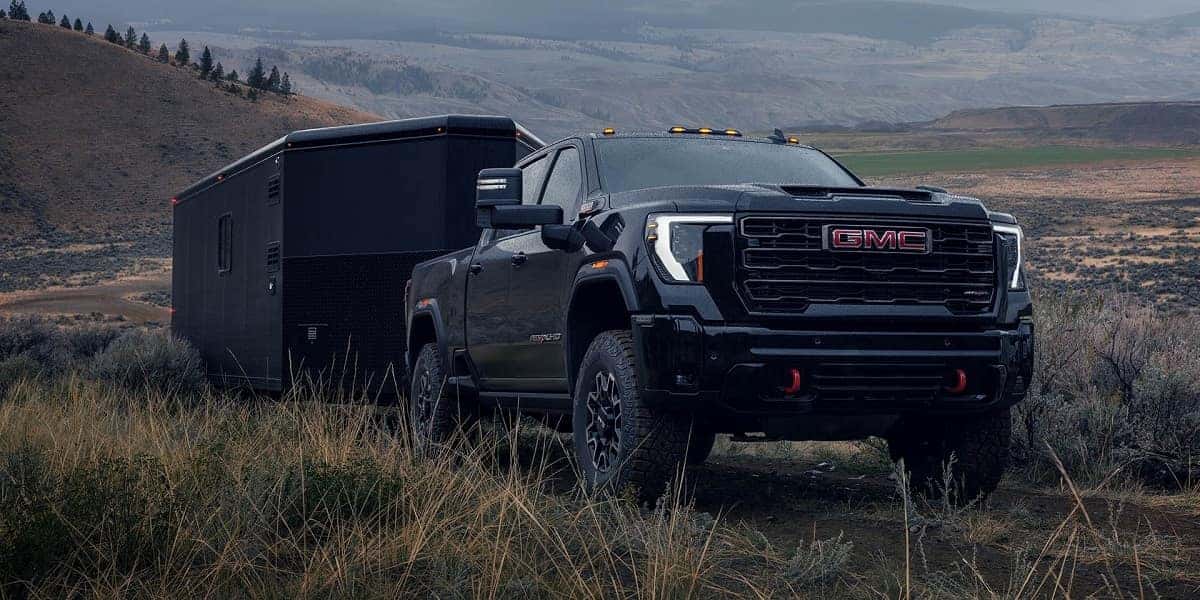
When you buy a Buick or GMC model that prides itself on its capabilities, you’ll need to know how to put them to use. That’s why we have created this quick guide to help you understand towing capacity for your next truck or SUV. With this knowledge from us at Jack Giambalvo Buick GMC, you’ll be prepared to take your GMC Sierra or Buick Enclave through York while hauling a load.
Start With the Manufacturer’s Towing Capacity
Every GMC truck and SUV comes with a maximum towing capacity rating set by the manufacturer. You’ll find this number in your Owner’s Manual or on the window sticker when you’re shopping for a new vehicle. That number is the ceiling, not the target. To know how much you can actually tow in real-world conditions, you need to work through a few more calculations that account for how your truck is loaded and configured.
Understand GVWR and GCWR
Two ratings are essential to understand before you ever connect a trailer. The first is the Gross Vehicle Weight Rating (GVWR), which is the maximum total weight your vehicle can handle. That includes the truck itself, passengers, fuel, cargo in the bed, and the tongue weight of your trailer. Exceeding your GVWR is illegal in most states and puts real stress on your brakes, suspension, and tires. The second is the Gross Combined Weight Rating (GCWR), which is the maximum allowable weight of your tow vehicle and the fully loaded trailer together. Think of it as the total system limit. If your GMC Sierra has a GCWR of 22,000 lbs. and the truck weighs 6,000 lbs. when loaded, your trailer can weigh no more than 16,000 lbs. while you drive through South Central Pennsylvania.
Calculate Your Available Towing Capacity
Here’s the formula we walk customers through on the showroom floor. First, take your GCWR, then subtract the curb weight of your vehicle and the weight of your passengers and cargo. What’s left is your available towing capacity. To put that into practice, imagine your GMC Sierra has a GCWR of 20,000 lbs., a curb weight of 5,500 lbs., and you’re loading it with 500 lbs. of passengers and gear. That leaves you with 14,000 lbs. of available towing capacity, even if the vehicle’s published maximum tow rating is technically higher. Always use your real-world loaded numbers, not the best-case figures on the spec sheet, and don’t forget to reach out to our Service Department for help with exact figures for your vehicle.
Don’t Forget Tongue Weight
Tongue weight is the downward force the trailer’s hitch point places on your vehicle’s hitch receiver. As a general rule, tongue weight should fall between 10 percent and 15 percent of the total trailer weight. Too little tongue weight causes dangerous trailer sway on the highway, while too much overloads the rear axle and affects your steering. Loading the heavier items in your trailer toward the front and keeping weight centered side to side will help you hit that target range consistently and keep you safe when taking a load of sports gear to Smalls Athletic Field.
Factor In the Trailer’s Loaded Weight
This is where many first-time towers get caught off guard. A camper that weighs 6,500 lbs. at the manufacturer’s dry weight can easily top 8,000 lbs. once you’ve filled the fresh water tank and packed it with gear, clothing, food, and supplies. Always calculate based on the fully loaded trailer weight rather than the base weight listed in the brochure.
Come to Us With Questions
Every GMC truck can be configured with different engines, axle ratios, and tow packages, and those choices significantly affect your final towing numbers. The Max Trailering Package, for instance, is specifically designed to unlock a truck’s highest available tow ratings. Our team members are here to help you match the right vehicle configuration to your specific trailer or camper so you can tow with confidence every time you hit the road.